Zero propellant. Infinite possibilities.
A new era of motion begins.
DISCOVER MORE ABOUT GENERGO
Genergo is an Italian deep-tech company based in Como developing space-propulsion systems that convert electrical energy directly into thrust, without propellant and without expelling reaction mass. The company’s proprietary system has surpassed 1300 hours of on-orbit operation across three missions and has reached a maturity level equivalent to TRL 7/8, supported by independent analyses conducted on data acquired under real operating conditions. Genergo’s vision is to make mobility in space safer, more sustainable, and reusable.
Operational satellites equipped with propulsion carry propellant on board to perform orbital maneuvers, maintain position, and, in some cases, execute end-of-life atmospheric re-entry. Propellant takes up volume and adds mass – often further increased by the hardware required to manage it (pressurized tanks, control valves, feed lines) – introduces operational risks (leaks, explosions), and is, by definition, a finite resource. Once depleted, the spacecraft is no longer maneuverable and the mission ends.
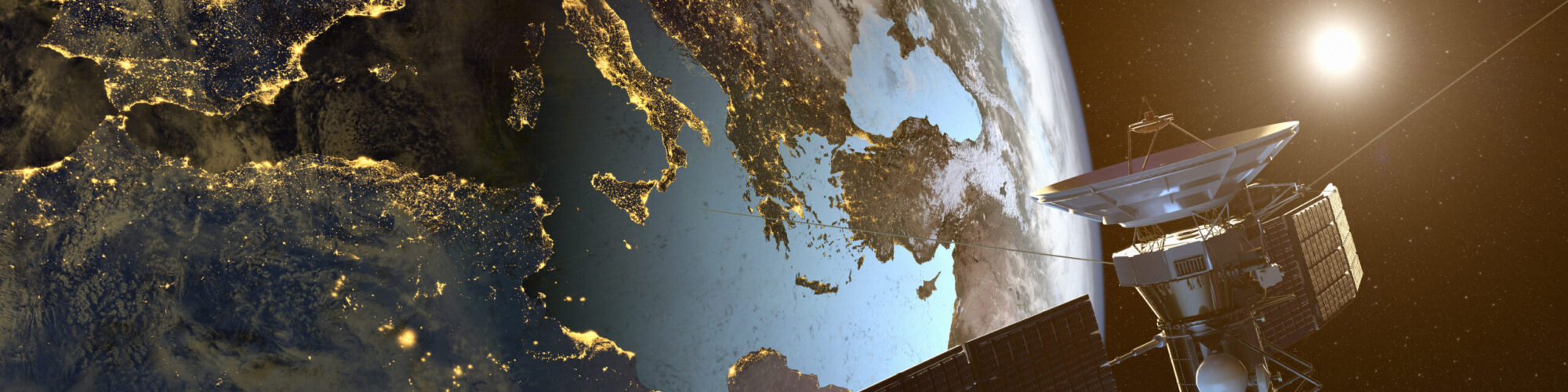
Genergo’s system generates thrust without using any propellant and without expelling reaction mass, by directly converting electrical energy into thrust through controlled electromagnetic impulses. To the company’s knowledge, it is the first space-propulsion system worldwide capable of operating without propellant, flight-tested and validated on orbit, and it represents a clear discontinuity from current standards. By design, the technology is scalable and operates with a modest power requirement.
The system also exhibits a highly sustainable profile: it uses no hazardous or toxic materials, requires no pressurized components to be stored on board, and introduces no risk of contaminating the space environment—either during operations or upon atmospheric re-entry.
The performance achieved to date by the flight-tested prototypes is already aligned with market requirements for specific mission profiles.
In addition to further on-orbit campaigns aimed at continued development and characterization of the technology, the first planned commercial applications will be station-keeping and propulsive deorbiting.

News, press releases and insights from GENERGO.
For further information, please get in touch using the contact form below.
DISCOVER OUR LAUNCHES BELOW

LAUNCHES
After passing, on the first attempt and within a few months, all mission launch-qualification tests to the industry’s most stringent standards, the technology accumulated more than 1300 hours of on-orbit operation across three missions launched between 2022 and 2023:
GEN01
We firstly ventured into space on board Infinite Blue, the sixth mission of D-Orbit’s ION Satellite Carrier (ION) (https://www.dorbit.space/infinite-blue-may-2022), launched on May 25, 2022 at 14:35:41 EDT (20:25:41 CEST) from the Space Launch Complex 40 (SLC-40) at Cape Canaveral Space Force Station (CCSFS), Florida, aboard SpaceX’s Transporter-5 mission.
Our test in space took place in collaboration with Politecnico di Milano, Department of Aerospace Science and Technology.
Video credit: SpaceX
GEN02
Our second venture into space launched on board SCV008 Fierce Franciscus, the seventh mission of D-Orbit’s ION Satellite Carrier (ION) (https://www.dorbit.space/second-star-to-the-right-january-2023), launched on January 3, 2023 at 9:56 a.m. ET (14:56 UTC) from the Space Launch Complex 40 (SLC-40) at Cape Canaveral Space Force Station (CCSFS), Florida, aboard SpaceX’s Transporter-6 mission.
After the promising results of its first space mission (still ongoing), Genergo’s second generation innovative space propulsion system (Gen-02) tested new technical specifications that will also serve for future developments.
Video credit: SpaceX
GEN03
Our third venture into space travels on board ION SCV Ultimate Hugo, the 12th mission of D-Orbit’s ION Satellite Carrier (ION) (https://www.dorbit.space/cosmic-wander-november-2023), launched on November 11th, 2023, at 10:49 AM (PT) (6:49 PM UTC) from the Space Launch Complex 4 East (SLC-4) at Vandenberg Space Force Base in California (USA), aboard SpaceX’s Transporter-9 mission.
Building on the successes of Genergo’s previous two space missions launched in 2022 and earlier in 2023, the third generation of our in-space propulsion system (Gen-03) is being used to test new configurations and technical specifications, further pushing the boundaries of space exploration.
Video credit: SpaceX – VideoFromSpace
Over the past two years, multiple on-orbit activation cycles have continued alongside data analysis and characterization activities; additional tests are planned to further characterize the technology.
The campaigns confirmed system functionality in real space conditions, bringing the technology to a maturity level equivalent to TRL 7/8 (Technology Readiness Level). As additional confirmation of the results, several long-duration tests were conducted in which it was observed, objectively and repeatedly, that motor activation produced a measurable acceleration or deceleration of the host spacecraft.

Propelling Space. Without Propellant.
Space-qualified. Space-proven. Space-changing.
Genergo SRL